

Gardens have their own notes in history
Gardens often carry more history than people realize. That felt especially true this month, as our March meeting and the Liberty Tree ceremony at the Franklin County Archives both connected gardening with history.
Carrie Hovater presented a program at our March meeting on the founding gardens of America, focusing on George Washington’s Mount Vernon and Thomas Jefferson’s Monticello.
At Mount Vernon, Washington developed gardens that combined practical farming, experimentation and beauty.
In the 1760s, he created kitchen gardens to supply food for the estate, growing vegetables, fruits and herbs for the household.
A unique feature of Mount Vernon was Washington’s botanical garden, where he experimented with seeds and plants sent by friends and contacts across the colonies and from Europe. He recorded planting dates and results in his diaries to see which crops would grow successfully in Virginia’s climate.
Mount Vernon stood out to me because it balanced beauty with practical use.
Jefferson brought that same spirit of curiosity to Monticello.
Beginning around 1770, he developed a two-acre vegetable garden built into a 1,000-foot terrace on the mountainside. He treated the garden almost like a scientific laboratory. He documented more than 330 varieties of vegetables and 170 varieties of fruit while testing which were best suited for cultivation.
Monticello included orchards, vineyards, berry plots, and ornamental flower gardens.
Jefferson frequently exchanged seeds with gardeners and scientists around the world to help introduce new plant varieties into the United States.
Today, Monticello preserves and distributes those historic varieties through the Center for Historic Plants. Many of those plants still grow today, which makes this history feel a little more immediate.
Judy Baker shared information on the 2026 National Cherry Blossom Festival in Washington, D.C., set for March 20 through April 12.
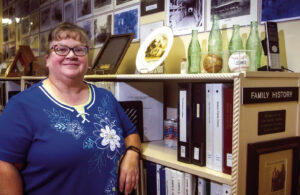
Carrie Hovater
Washington’s cherry blossoms trace back more than a century, beginning with the first gift from Mayor Yukio Ozaki of Tokyo in 1910. Disease later damaged those trees, but in 1912, officials replaced them with more than 3,000 new trees.
A few of the original Tidal Basin trees still bloom each year, and thousands more now grow throughout the district.
The blossoms still mark spring in the nation’s capital, but they symbolize friendship between the United States and Japan. In 2026, the Japanese Embassy will gift 250 new trees in honor of America’s 250th birthday.
The March program and the Liberty Tree ceremony made me think again about how often gardens carry history with them.
The Liberty Tree ceremony at the Franklin County Archives brought that idea close to home. Cultura Garden Club took part in the ceremony with President Cheri McCain helping place fertilizer around the tree.
For me, that was a reminder that gardens do more than add beauty. They can teach us something and help carry history forward.
Also, a reminder that sales are due by March 30 for Cultura Garden Club’s annual spring flower fundraiser, which supports community projects. Delivery is expected April 30. Items include hanging baskets and garden selections.