

Highway 48 chosen for state project
RUSSELLVILLE — City officials have selected a 0.62-mile section of Highway 48 for its fiscal year 2027 Rebuild Alabama transportation plan.
The 3,274-foot section of Highway 48 extends from Highway 43 to the Russellville city limits near Payne Creek Mobile Home Park.
Estimated cost of the project is $90,066.65.
The city’s transportation plan estimates Russellville will receive $103,785 in Rebuild Alabama revenue during fiscal year 2027.
City Clerk Belinda Miller said officials considered three roads Highway 48, Lauderdale Street Northwest and Whitten Road.
“We chose the city portion of Highway 48 based on the location and the high traffic count,” she said.
Miller said Rebuild Alabama funds are required to be maintained in a separate account under Act 2019-2 and the city will use all of those funds for paving.
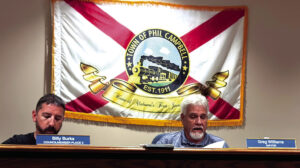
Councilman David Palmer said he was asked to identify streets that ranked high in StreetPro and could be addressed within the amount of Rebuild Alabama money available.
Palmer, who previously served 32 years as the county engineer, said StreetPro uses pavementcondition data, average daily traffic counts, and data on residents and businesses along each street to generate priority scores and rankings.
He said the three roads were among the top 25 of roughly 380 to 400 street segments in the system.
Palmer said Highway 48 carries approximately 3,100 vehicles per day. He said Franklin County maintains the road beyond the Russellville city limits, where it continues to Tharptown as part of a longer route toward Leighton. He described the highway as a major collector that picks up traffic traveling between Russellville and communities along the route.
He said the pavement’s condition factored into the project.
“The biggest issue is that the surface has lots of cracks,” Palmer said. “The cracks are progressing.”
He said the preliminary project calls for microsurfacing, a pavement- preservation technique. He added the road has not deteriorated to the point that it requires more aggressive and expensive work.
He said the proposed work does not include drainage or shoulder improvements.
Palmer said crews would first apply material that fills and seals existing cracks, followed by a thin, hard finish layer over the existing pavement.
The FY2027 transportation plan lists the work as milling, resurfacing and striping.
He said microsurfacing can extend the life of a street by approximately 10 to 15 years and generally costs between 30% and 65% less than milling existing pavement and replacing it with hot-mix asphalt.
He estimated the Highway 48 section last received pavement maintenance in 2013 or 2014.
The Rebuild Alabama Act, passed in 2019, increased Alabama’s fuel tax and provides counties and municipalities with annual transportation funding. The act requires participating counties and municipalities to submit annual transportation plans to identify projects for funding consideration.
Palmer said the funding comes to the city as an annual allocation rather than through a grant application.
He said he could not guarantee the Highway 48 project will be completed during FY2027.
“Our plan and our hope would be, in this upcoming fiscal year, to go ahead and take bids, let a project on that, and get it done this year,” Palmer said.
Palmer said the project would fall under public works bidding requirements because Russellville does not intend to perform the work with its own crew. The city would advertise the project for open bids.
He said the process generally takes at least six months from approval through engineering, advertising, bidding, and getting a contractor ready to begin. For that reason, he said work would not begin before May.
He said the first treatment layer could be completed in one day and the final microsurfacing layer in about two days, putting the pavement work at roughly three days if weather and other circumstances cooperate. The microsurfacing material takes about an hour to cure enough for traffic, he said.
Palmer said there would be no full road closure during the work. He said crews would work one lane at a time and guide motorists through the construction area while keeping vehicles off freshly treated pavement.