

Miller is 1 of 13 operating dairies in state
CROOKED OAK — Craig and Jenilee Miller moved to the Russellville area in 2020 after finding a farm that fit what they were looking for.
“God put us here,” Jenilee said. “That’s how we got here.”
At first, the farm reflected a traditional homestead.
“We had horses, cows, goats, sheep and pigs,” Jenilee said. “We had a little bit of everything.”
Over time, one part of the operation stood out.
“We decided we really enjoyed the dairy cows, and we wanted to expand that part of the farm.”
Miller Family Dairy opened in 2020 as a raw milk operation with eight cows. Last week, the dairy completed a two-year project that lays out the groundwork to produce butter, cheese and other dairy products.
Today, the herd includes about 18 cows in milk, along with heifers and dry cows preparing to calve.
The Millers are working toward milking about 80 cows. The milking parlor can milk up to 16 cows at a time.
“We started off with just one milk cow and grew from there,” Craig said. “We had vegetables, and we’ve raised pigs and sold pork at different times. As things grew, it naturally transitioned into milk.”
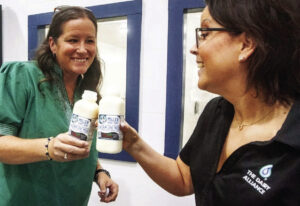
During last week’s tour, visitors followed the path milk will take once production begins, moving from the milking parlor into the processing room, where it will be pasteurized, bottled and prepared for sale.
The dairy’s first product will be cream-top milk, which differs from the homogenized milk most shoppers find in grocery stores.
Cream-top milk is nonhomogenized. That means the cream naturally separates and rises to the top instead of remaining evenly mixed throughout the milk.
Additional products are already planned.
“As we move forward, we’ll add other milk varieties, chocolate milk and other flavors,” Jenilee said. “We also want to make cheese and butter.”
Butter has been one of the products customers request most often, she said, along with fresh cheese.
“We’ve had a big demand for butter,” she said. “We’ve also had a lot of requests for fresh cheese, so we hope to add that as quickly as possible.”
The farm store already carries products from other local farmers, including meats, produce, honey and goat’s milk soap.
As production begins, the Millers plan to add their own bottled milk and, eventually, butter and cheese.
“Our goal here is to support the community,” Jenilee said. “We want to be a bit of a local hub where people can hang out, chat and catch up on local gossip.”
Education is another priority.
“We want to give full transparency back to people with their food products,” Miller said. “If you have questions, we can answer them. We know the farmers personally, and we work closely with them, so you can have the information you want about your food.”
The family hopes to host school field trips to help children better understand where their food comes from.
“Our goal is to get kids connected back to their food so they can make that full-circle connection,” she said. Meredith Casey, Alabama’s Resilient Food Systems Infrastructure program coordinator, said the project represents more than an investment in a single farm.
“There aren’t many dairies left,” Casey said. “Alabama’s dairy industry has taken a huge hit.”
She said the new facility will allow the Millers not only to process their own milk but also to create opportunities for other Grade A dairies in the region.
“They’ll be able to process that milk into fluid milk, butter and cheese,” Casey said. “That gives those producers a local market, and those products can then go back into the communities where the milk originated.”
Keeping those products in Alabama also keeps agricultural dollars circulating in local communities, she said.
“When that product is produced here and those dollars stay in the community, it helps strengthen our local infrastructure, roads, shared buildings and school systems.”
Casey said the project reflects the determination required to keep family farming alive.
“The Millers are the picture of resilience,” she said.
Jana Miller, manager of youth wellness for The Dairy Alliance and a registered dietitian serving Alabama and Mississippi, said the facility comes at an important time for the state’s dairy industry.
“This will give us 13 operating dairy farms in Alabama,” she said.
She said Alabama dairy farms produced 2.99 million gallons of milk last year, but the number of dairy farms statewide has steadily declined.
“I think it’s a great thing because we need more milk in our area,” she said. “It’s great to see another dairy farm added in Alabama.”
She also noted Alabama lost its largest milk processor following the COVID-19 pandemic, making locally owned processing facilities increasingly valuable.
“Every time we find a farmer willing to process their own milk, it’s a great addition,” she said.
Deputy Agriculture Commissioner Tami Culver Allen called the open house “an exciting day” for the area.
“The Alabama Departmentof Agriculture and Industries is proud of what they’re doing and the hard work they’re putting in,” Allen said.