

This year, let’s resolve to be more involved
Stop eating desserts.
Go to the gym every day. Read 50 books this year. Learn a language. Start my retirement savings.
Every year we make our resolutions, commit to new practices that we expect will make us better people – skinnier, healthier, smarter, richer. Of course we want to be the best versions of ourselves, but will any of those things actually make us happier? I’m not convinced. We tend to think that we’d be happier if we were skinnier, richer, and more disciplined, but the research on happiness shows the number one driver of our happiness is our relationships. We are satisfied with life to the extent that we feel connected to our community and a social network.
Unfortunately for all of us, social connectedness has been on the decline for decades. Even as we gained social networks via social media, we were losing social networks in real life.
Americans today are significantly less likely to be members of clubs, groups, religious institutions. We have fewer friends, and we tend to spend less time with both friends and family members. In short, we are lonely. Getting a hot body won’t make you any less lonely. Reading more books won’t solve your isolation. Improving your credit score won’t give you a deep sense of satisfaction or sense of belonging. Loneliness doesn’t get solved by making ourselves more appealing to others, it gets solved by committing to spending time with others engaged in shared purpose. Sixty years ago, the average American was a member of four or five civic groups – church, fraternity, Rotary club, choir, union. Nowadays, the average is zero or one. We might be in a dozen online groups, but virtual friendships pale in comparison to real-life friendships. We might have a group of friends with whom we complain, but we are less likely to have a group of friends with whom we take meaningful action.
Getting involved in our communities isn’t just a salve for our loneliness. It’s also a solution to the general frustration we all feel about politics and our institutions. As loneliness has been rising, trust in our civic institutions has been falling. We don’t trust them because we don’t feel like we have any control over them. Too many Alabamians don’t vote because they don’t think their vote matters.
These days we assume that institutions (like political parties) and leaders (like politicians) are calling all the shots and we are left powerless to stop their drumbeat towards division, culture wars, and domination of the few over the many.
I am devastatingly familiar with the tendency of Democrats in Alabama to call out the fecklessness of party leadership while forgetting that grassroots Democrats have the power to control that leadership. I suspect that grassroots Republicans in the state are also forgetting that they have the power to reject the absurdity of their own party’s so-called leaders. It really doesn’t have to be this way.
When we get involved in our communities and take control of our institutions, we stop feeling powerless. We start telling our politicians to shape up or else. We recognize that they aren’t our leaders, they are merely our representatives carrying out marching orders we gave them.
Things that aggravate us in our surroundings stop feeling like thorns to be suffered through and start feeling like problems we merely need to prioritize. When we’re a part of an active community that’s tackling shared problems, all sorts of improvements seem possible.
That feeling – my friends and I are actively making the world we want – that’s happiness. So, this year, let’s make a new resolution. Let’s resolve to get to know our neighbors, spend more time with friends, join a club/choir/team, form a community group. That’s a resolution worth pursuing.
The best part of this resolution is that it solves multiple problems at once. We get friends, we get a sense of purpose, we get to feel our own power. And did I mention? We get to eat as much dessert as we want along the way.
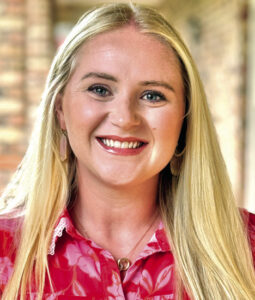
Tabitha Isner is the vice chair of the Alabama Democratic Party, and the founder of Atlas for Democracy, a nonprofit focused on civic engagement.