
Budget work will be hard this year
By Staff
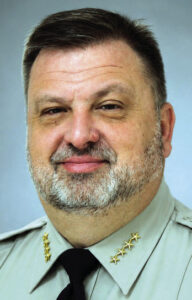
Johnny Mack Morrow
The 2008 Legislative Session begins on February 5, and there is a lot of work to do before the opening gavel.
The most important thing the Alabama Legislature does every year is set the budgets for education and state agencies. How we use precious tax dollars maintaining and improving vital public services is the key issue for any lawmaker. While passing statutes is important, funding is always the critical issue. What good is a law if there are no resources to enforce and uphold it? What good is a program if there is no way to pay for it?
It looks like this year the state budgets will require a lot of work and tough decisions.
The Alabama state budget is divided into two categories: the Education Trust Fund and the General Fund. The Education Trust Fund pays for our K-12 schools, as well as our state colleges, universities, and two-year institutions. The General Fund pays for everything else, from prisons to the courts, Medicaid to public health, and all other state services.
As it turns out, the Education budget is the larger of the two– $6.7 billion this year. Unlike most other states that rely mostly on local property taxes to pay for schools, Alabama pays for its public schools mostly through state sources. We have the lowest property taxes in the nation.
To pay for schools, we have earmarked the state income tax and the state sales tax to the Education Trust Fund. Dedicating certain taxes to specific efforts lets folks know that their tax dollars are being spent wisely. Nobody likes paying taxes, but at least we know what exactly they are paying for.
And that investment in schools is paying off. Our test scores are up, and drop out rates are down. In fact, Alabama elementary reading scores made the largest gains in the entire nation.
The state education budget had tremendous growth in recent years as the Alabama economy grew. More folks have jobs, they pay more income taxes, they buy more goods, and more money is generated for schools. The gains in achievement show that money has been well spent.
Yet for all the progress in education, there is still room for improvement. We still rank in the bottom 20 percent on what we spend per child. We are still behind other states in areas like special education, and science and math scores.
We must make sure that we continue to make gains in our schools, but that may just become a little more difficult.
All signs point to a slowing economy. As growth lessens, so do the taxes generated from economic growth. While the state education budget is set at $6.7 billion, the tax revenue we'll generate this year now is predicted at $6.4 billion, a $300 million shortfall. In past years, when revenue fell short the state declared proration, the ugly process of cutting school budgets in the middle of the year. This year we will not have to, because during high growth times we saved substantial funds in rainy day accounts. However, in order to make sure we don't continue to run short, we'll need to see where we can tighten our belts to get next year's budget closer to the now lower revenue projections.
The General Fund has no rainy day account, and has been the sickly sister to education in recent years. All non-education taxes, like Ad Valorem Taxes and the interest from the Alabama Trust Fund from the state's offshore oil and gas leases, are earmarked for the General Fund. However, these revenue sources have not grown as fast as income and sales taxes.
While revenues were flat, costs have risen dramatically for programs paid by the General Fund. The courts have ordered reduction in prison overcrowding, Medicaid and other health care costs have spiraled upward, and we've hired more state troopers and increased our child protection services.
The General Fund is under constant strain. There are some capital gains from the trust, and a few other sources we hope to put together to get a budget that will pay for these vital services next year.
Organizing and passing budgets are certainly some of the toughest work we have in any session. This year, with the economy unsettled, it may be one of the toughest years in recent memory.
Johnny Mack Morrow is a state representative for Franklin County. His column appears each Wednesday.