
Journalists don't do the crime but risk the time
By Staff
August 15, 2004
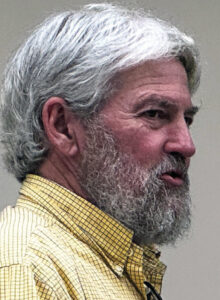
By Paul K. McMasters / guest columnist
When government officials commit the crime of leaking secrets, journalists usually are the first ones targeted for punishment. And right now, the nation's capital, which leaks like a sieve when it comes to government secrecy, is abuzz with the prospect of journalist after journalist marching off to jail rather than compromise their sources.
Early last week, it was reported that U.S. District Judge Thomas Hogan had found Time magazine reporter Matthew Cooper guilty of civil contempt of court, ordered him confined "to a suitable place" and fined his employer $1,000 a day. The order was stayed until the newsmagazine can appeal the judge's decision.
And what was Cooper's crime? Actually, he didn't commit the one under investigation. He just refused to testify before a grand jury about someone in the Bush administration who did commit a crime by leaking the name of a covert CIA operative. In that investigation, a number of other journalists face the same dilemma as Cooper: Burn a source or go to jail on behalf of the public's right to know.
Most experts predict that Cooper could wind up doing the time up to 18 months even though he didn't do the crime. If so, he won't be the first and probably won't be the last.
Realities
Some blame journalists themselves for this predicament. If they weren't so careless and casual in their dependence on anonymous sources, there wouldn't be a problem. That, however, ignores the realities of the political process in the nation's capital these days.
First, Washington is awash in the most pervasive secrecy in modern memory. In addition, massive amounts of unclassified material are now being placed beyond the reach of the public and local and state officials, as well as the press, in the name of homeland security.
Further, government officials have mastered the art of bending information to their needs. They have developed sophisticated news management techniques. They have a stable of partisan pundits at the ready. And when the political need arises, they are not averse to arbitrarily or spontaneously declassifying secrets that a moment before were absolutely crucial to our national security.
There are few ways for government officials or others with information about mistakes, wrongheadedness or abuse of power to make that known, unless they confide in the press. And they won't do that if they fear that their careers and families will suffer because journalists under threat of jail will reveal their names.
In this environment, journalists have had to develop workarounds to meet the civic need and constitutional right of the American people to reporting that goes beyond a transcription service for government officials. These workarounds include the leaker, the anonymous source and the whistleblower, who provide nuance and balance coverage of government activities.
Occasionally, a leaker tries to abuse the system to punish a critic, as some allege in the leak of the CIA operative's name. But mostly this system works remarkably well. Every day, Americans learn crucial information about government policies and performance from news stories that include official information leavened by information coming not from just one source, but in most instances a cascade of leaks sorted and evaluated and balanced by the journalistic process.
System threatened
Judge Hogan's order threatens that system. In effect, the judge said that journalists who want to protect confidential sources don't have a First Amendment leg to stand on. Their choice is either to ignore the public's right to know or go to jail. Traditionally, journalists confronted with such a dilemma have felt so strongly about this that they have chosen jail rather than compromise their sources.
The judge's confidence that the prosecutor has a right to require the reporters' testimony aside, there simply is no way for the government to force testimony by reporters in such instances without getting far beyond the mere naming of a source and into the reporting and newsroom decision-making process itself, a place the First Amendment says it shall not go.
There has to be a better way.
The problem is not leaks, of course. The problem is pervasive secrecy, only a fraction of which really protects our security. The rest is for cover and control and on occasion the punishment of someone in the press or government who provides a counterpoint to the message of the day or the spin of the moment.
Until that problem is addressed, government officials will be tempted to intrude on the editorial process, journalists will have to choose between professional ethics or jail, and the public will have to worry about getting only the "official" story or more chillingly no story at all.
Paul K. McMasters is First Amendment ombudsman at the First Amendment Center, 1101 Wilson Blvd., Arlington, Va. 22209. E-mail him at pmcmasters@fac.org., or visit the Web site www.firstamendmentcenter.org.