


Author’s collapse was motivation for comeback
When Pete Key collapsed on the bathroom floor in 2024, it didn’t feel like a turning point. It felt like an ending.
He had been sick for days — dehydrated, barely eating, determined to push through what he assumed was just another obstacle. That morning, he told himself he was done being sick. He went downstairs and turned on the shower.
Then his body gave out. His wife was already at work, but his daughter was upstairs. From the cold tile floor, weak and unable to stand, Key texted her for help. Paramedics came, and he spent the next five days in the hospital, where doctors uncovered a series of underlying issues — blood pressure, blood sugar, kidney function — problems he hadn’t known existed.
“That incident,” Key said, “is the reason I’m healthy today. If it hadn’t happened, I wouldn’t have found all those other things.”
What felt like an ending became the beginning of something he never expected: his return to music, the writing of his most personal book, and the launch of a new podcast — three projects bound together under the same title, “It’s Not Over.”
“If you still have a pulse,” Key said, “you still have a purpose.”
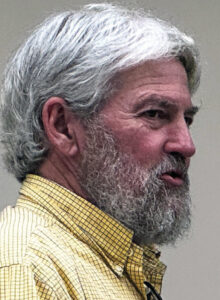
For decades, Mansfield Key III — known to most as Ole Pete Key — has lived life in motion. He is a coach, consultant, social entrepreneur, and international motivational speaker.
He has worked with the Centers for Disease Control and Prevention and the Department of Health and Human Services in all 50 states, consulted for departments of education and public health, and partnered with organizations as far away as Johannesburg, South Africa, and Liverpool, England.
But accolades, Key insists, were never the point.
“What people see are the highlights,” he said. “They see Pete Key has gone to Africa. They’ve seen me with Bishop T.D. Jakes, Les Brown and Steve Harvey. Those are some big moments. I won’t say they’re not, but it’s those little things, you know. When a kid gets it. Something you said lit a spark within them.”
Since 2015, Key has helped lead Leaders in Training (LIT), a program embedded in Florence City Schools for students in grades five through 12. The curriculum focuses on conflict resolution, emotional intelligence, and responsibility. What began as a solo effort has grown into a five-person team.
“These are the things nobody sees,” he said. “But when a parent says, ‘My child listens to you,’ that’s everything.”
He also serves as character coordinator for student-athlete development at the University of North Alabama, mentoring more than 400 athletes across football, baseball, soccer, tennis, golf, volleyball, and other sports.
And even after his hospitalization — after doctors told him to slow down — Key became a Big Brother through Big Brothers Big Sisters. His “Little” is 10 years old and struggling with challenges Key wishes no kid had to face.
“I’m always saying I don’t have time,” Key said. “But then I look at that kid, and I know why I make time.”
To understand why Key keeps showing up for others, you have to go back to West Florence, to a classroom where he learned — painfully — that he couldn’t read.
One teacher humiliated him publicly, calling him to the front of the class and insisting he read Shakespeare. When he stumbled through the words, classmates laughed. As he prepared to leave the room in embarrassment, the teacher delivered a sentence that stayed with him for years.
“People from your neighborhood haven’t read many books,” she told him. “You don’t need to read that well to do what you’re going to do anyway.”
That same day, Key went home to learn his father had left. His parents were divorcing. His father was struggling with addiction. The weight of it all landed at once.
“How much worse could it get?” he remembered thinking.
The next day, another teacher noticed something different. Amy Stockard Holt looked at Key’s grades — A’s in her class, failures in others — and asked a simple question: How?
“You’re one of my brightest students,” she told him. “You just learn differently.”
Mrs. Stockard showed him how to record himself reading, pairing sound with sight. The strategy unlocked something inside him.
“One teacher embarrassed me,” Key said. “The other empowered me.”
Mrs. Stockard died earlier this year at 96. Key spoke at her funeral, describing her life with three words: faithful, fruitful and finished.
“She was faithful in her teaching, fruitful because she could look at students like me — I came from Mrs. Stockard — and finished,” Key said. “I hope that’s what I can say for myself. I want to be faithful and finish the assignment I am called to do.”
Most see Key and might assume he’d felt fulfilled from his work before the recent hospitalization. Although he takes pride in his accomplishments, he admits that day was still something of a wakeup call.
Early in his career, Key found himself serving as a social services worker at Handy Head Start, helping low-income families access resources. He loved the work and believed in it. What he didn’t expect was to need those same services himself.
His first paycheck was $637. The mortgage on the house he and his wife were trying to sell in Atlanta was $657. They were $20 short. Soon after, Key walked into a WIC office — not as an advocate, but as a client.
“I went from referring families to WIC,” Key said, “to being one of them.”
Another memory still lingers as well. Key described standing in a grocery store checkout line, paying with a sock full of loose change as customers waited behind him.
“I’m sitting in my car afterward, talking to God,” he said. “Like, ‘This can’t be it. I’m trying to help others, but I’ve got a wife and kids who depend on me, too.’” Looking back, he believes the message was clear.
“Don’t you ever be ashamed to allow people to see you where you are right now,” he said.
Today, the memory of those low points have reshaped how Key talks about hope — not as a motivational buzzword, but as something hardearned and actionable.
“Hope gives you motivation,” he said. “Motivation drives effort. Effort produces results. But none of it starts without hope.”
Pondering those life lessons he’s learned along the way — and realizing his could be cut short at any moment — Key began to revisit dreams he’d allowed himself to give up on when he was younger. Music, he added, had been his first love.
Years ago, he had written and recorded songs, including a project for preschoolers that blended hip-hop and country to teach ABCs and counting in English and Spanish. But a “real” rap album had long been filed under “things I used to do.”
That changed after a friend asked him to write a tribute for his daughter, Joy, who had died unexpectedly at 21. Key’s own daughter, Joi, was 22.
In the studio, a producer encouraged Key to get on the track himself. During a TikTok Live session, viewers chimed in with encouragement. One song turned into another. Soon, there were 20.
The album “It’s Not Over” became a concept project, telling the story of a man collapsing, drifting through reflection and regret, and emerging with clarity. Tracks like “Dead Dreams,” “Fear,” “It’s Never Too Late,” and “Well Done” confront the questions people avoid until life forces them to listen.
“I wrote my own obituary,” Key said. “What do you want people to say about you?”
As Key explained the meaning behind the songs, the conversations deepened. He began writing reflections to provide context. Before long, he realized he wasn’t just explaining music — he was writing a book.
The book “It’s Not Over” parallels his return to music with a larger question: What dream did you abandon, and why?
“Sometimes the dream isn’t dead,” Key said. “It’s just dormant.”
The book includes a 52-week guided journal designed to help readers take inventory of their lives — whether they’re starting out or starting over. He thought about his mother, Shirley Key, who died at 54 from breast cancer after years of saying “one day.”
“It was always, ‘One day, I’m not going to work so much.’ ‘One day, we’ll go on that cruise.’ Well, one day never came,” he said. “It’s like that thing Les Brown said: ‘Sometimes people die at 25 and aren’t buried until they’re 70,’ meaning, from 25 on, they’re just existing. I don’t want to just exist. I want to live.”
Those ideas continued to grow. What started as an album, later included the book, and now is transforming into a podcast series titled “Hope is Not Enough.”
Recorded in front of a live studio audience, the weekly show explores the gap between inspiration and action. The first episode was recorded on Dec. 20, with audiences invited to attend future tapings.
“Hope matters,” Key said. “But it’s not the finish line.”
The hospitalization forced Key to confront a truth he had long ignored.
“If you’re always available for everyone,” he said, “eventually you’ll have nothing for anyone.”
Now, his wife manages his schedule, engagements go through her and travel includes rest. As Key points out, the toughest lesson he’s had to learn so far is that “no” is a complete sentence.
“I hate that I had to learn it like that,” he said. “But you only get one body and one life. You’re only one person. So, now I’m focused on the podcast. I’ve started training others this year, so I’m duplicating myself in other leaders who can do what I do.”
Key said “It’s Not Over” isn’t just about reinvention. He hopes others can be inspired by the words in the music, the book or the podcast, whether they’re just now taking the first step on their journey or re-emerging toward dreams they’d let go of years ago.
“It’s not over until it’s over,” he said. “Sometimes people hear the bell ringing and they think that’s the end of the fight. No, sometimes the bell rings because it’s just the end of a round. Again, sometimes the dream is not dead. It’s just dormant, waiting on you to wake up.”
Planting hope
“Hope is Not Enough” was birthed out of Pete Key’s lifelong passion for motivating people and planting hope wherever he goes. Expected to release in the new year, the book and 52-week journal, “It’s Not Over,” are available to order through the author’s website, https://www. itsnotover.co/. Books will also be available for purchase at the live podcast recordings. “It’s Not Over” the album is available online at https://www.itsnotover. co/, and may be streamed on all major platforms.